
shopping cart
Your shopping cart is empty.
ozhut stores
Want Help or Advice? Call us on (03) 9780 1802

Telescope Magnification and Using Eyepieces
by: OZScopes - The Australian Telescope Experts

To understand the relationship between the independent optical systems of a telescope (the telescope itself and the eyepiece being used), knowledge of a scope’s power, or magnification, is extremely essential. We do this by first learning about the term Focal Length.

Focal Length
The distance, usually measured in millimetres, of an optical system from the lens/primary mirror to a scope’s point of focus (also known as focal point) is a focal length. Generally, the longer the focal length, the more magnification it produces so images are larger, but with a smaller field of view. As an example, a telescope with 2000mm in focal length has twice the magnification and half the field of view o f a 1000mm telescope.


Calculating maximum magnification:

Focal length / diameter of eyepiece  = maximum magnification

Note: Using different eyepieces can always modify maximum magnification.
Eg: On a telescope with 1000mm focal length, a 25mm eyepiece would yield a maximum power/magnification of 40x (1000/25) and a 10mm eyepiece yield a maximum power of 100x (1000/10).


Optimum magnification:

Telescope power does have a practical lower and upper limit as prescribed in the laws of optics. At powers more than a scope’s upper bound limit, a telescope captures additional air particles, resulting in images appearing as blurry. As a rule of thumb, the maximum useable power is equal to 2 times the aperture (in millimetres) of a telescope under normal conditions. Powers higher than this would result in low contrast images. So, if you want high magnification mainly for lunar, planetary, and binary star observations, you should opt for a bigger aperture since it allows for a larger optimum magnification, although that comes at an increased price.

Using Eyepieces
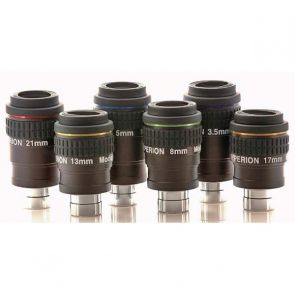
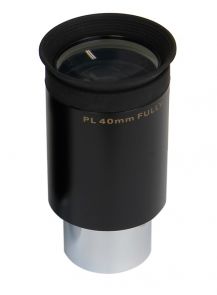
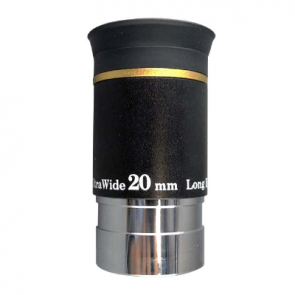
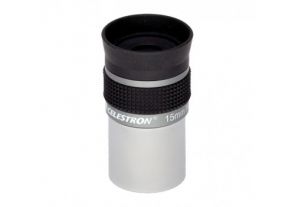
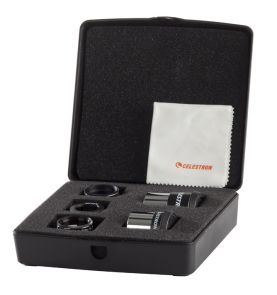
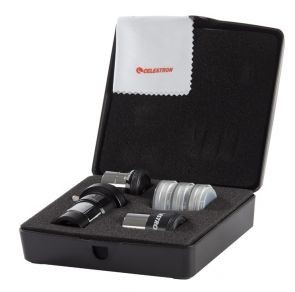
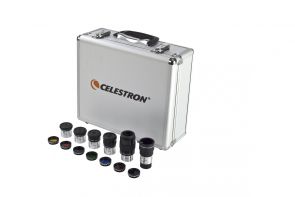
Telescopes such as ours at OzScopes come with a wide selection of eyepieces for various types of observations. The most common eyepiece is the 25mm one used to get the optimum magnification for your scope, and most telescopes come with this.

When choosing eyepieces, it is good to remember that the telescope is only as good as the eyepiece. By choosing a poorly manufactured eyepiece, you will not be getting the advantage of the quality of a superb telescope. There should be a balance between the quality in both eyepieces and telescope. A top-of-the-line telescope should be matched with quality eyepieces. At OzScopes, our manufacturers are reliable and known for good quality eyepieces at a good price.


You may also be interested in: night vision optics and our range of rifle scope.
FeedbackForm