

So you've got the hang of how a telescope works and can perhaps identify a deep sky object or two. You now want to photograph astro objects. Here's what you need to get started!
In this chapter we explain the basics you need to know to get Astrophotography right. Whether you are using a digital camera or a digital SLR camera, our guide will walk you through the whole process of how to get started with plenty of Astrophotography Tips along the way!
Astrophotography Tip #1 – Picking a telescope for astrophotography
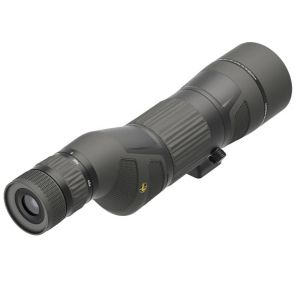
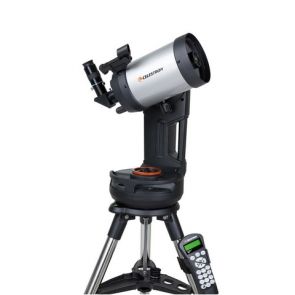
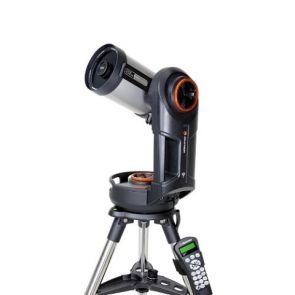
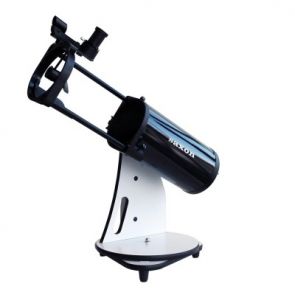
As a general rule of thumb, the best telescopes for astrophotography are Cassegrain telescopes. The reason for this is their longer focal lengths. Longer focal lengths mean a greater ability to get well focused views of different objects in the night sky. On top of that, cassegrains use a combination of lenses and mirrors that equate to a well rounded, crisper image quality when compared to other types of telescopes. Across the board, cassegrain telescopes are the main tools of the trade for avid Astrophotographers!
On top of that, reflectors have an open tube construction which leads to dust collecting on their mirrors. The dust doesn't really look that great when they're on your photos.
Astrophotography Tip #2 – What tools will I need?
Besides the obvious telescope and camera, you will need several attachments to be get started in astrophotography. So before you start feeling overwhelmed by the thought of confusing accessories, just remember that you first need to ask yourself, do I want to use a simple point and shoot digital camera, or will I be using a Digital SLR camera for my astrophotography. Depending on which one you intend to use, we've laid it all out for you below.| Film / Digital SLR Cameras | Point and Shoot Digital Cameras |
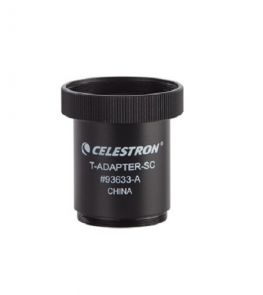
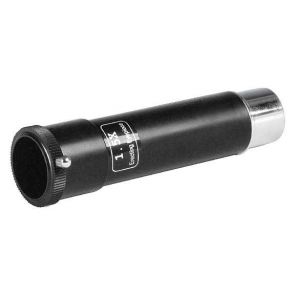
If you are planning to use a Digital SLR for astrophotography then there are 2 main accessories you should consider, T-Adapters and T-Rings. If you would like to look at the full range of them you can find them here. ![]() T-Ring ![]() T-Adapter We've got 3 different types of T-Adapters listed on our website catering to different telescopes: 1.25 inch eyepiece - If you've got a telescope with a 1.25 inch eyepiece, you're good to go with the Celestron Universal T-Adapter – 1.25”. This T-Adapter will fit most telescopes, especially if it is a reflector or refractor style telescope. NexStar 4SE, the C90 or C130 Mak - If, on the other hand, you own the NexStar 4SE, the C90 or C130 Mak, then this T-Adapter is the one for you: the Celestron T-Adapter for NexStar 4, C 90 Mak and C 130 Mak. There's also another T-Adapter for all the other Cassegrain telescopes (the bigger telescopes) – namely, the 5” to 14” models – which is the Celestron T-Adapter (C5, 6, 8, 9-1/4, 11, 14). Take note – if you own one of the models listed for the Celestron T-Adapter for NexStar 4, C 90 Mak and C 130 Mak, or the Celestron T-Adapter (C5, 6, 8, 9-1/4, 11, 14), you should try to get whichever of the two corresponds to your telescope. Although you can use the Celestron Universal 1.25” T-adapter, you might experience a vignetting effect around your pictures with telescopes with a 5” aperture and above. With aperture sizes of 8” and 9”, you will definitely experience some vignetting. |
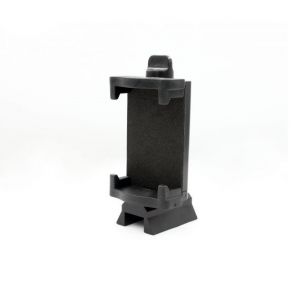
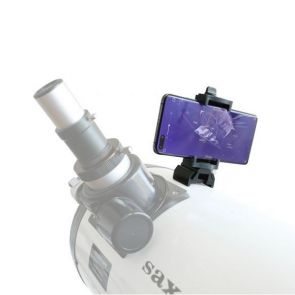
![]() Universal Camera Adapter So if you own a standard point and shoot camera (e.g Canon IXUS) there are still options for you to get some great astrophotography shots. Getting started requires just one tool (a lot simpler huh!) a Universal Digital Camera adapter. In terms of variety of choice you have 2 options, one being the Saxon Universal Digital Camera Adapter and the Celestron Universal Digital Camera Adapter. With the Celestron, you do pay a little bit more, but you get the associated brand-name, after sales service, and a slightly superior build. These digital camera adapters perform the same function as a T-Ring – however, instead of screwing your camera onto the telescope, the digital camera adapter 'holds' your camera right up to the eyepiece of your telescope. Now, you might be thinking why you'd want to do that because you could do the same thing with your hands, but it is far more stable when you use an adapter than if you held it there on your own. You're probably already aware, but when you're taking pictures, stability is paramount for a clear, well-focused image. |
Astrophotography Tip #3 – Supporting your telescope with a camera attached

If you own a telescope with an equatorial mount, you may have to adjust or add additional counter weights to compensate for the weight of your camera. With computerized telescopes , if you can hear the motor struggling to track or move with the camera attached, you may end up straining or even burning the motor. What you can do is to remove the camera while the telescope is moving, and re-attach it once it has located your selected celestial object.
That's pretty much it, folks! We hope you found these Astrophotography tips helpful!