


shopping cart
Your shopping cart is empty.
Want Help or Advice? Call us on (03) 9738 4002

You're currently on:

Customer Service

Customer Service Assistance:
9AM - 5PM AEST, Mon - Fri

Call us on (03) 9738 4002 or
email us
 

Binoculars 101: Binocular Basics
by: OZScopes - The Australian Telescope Experts

Choosing the ideal pair of binoculars begins with familiarising yourself with a few technical terms. Together, these basic features will determine how a given pair of binoculars will perform in the field.


Let’s take a closer look at these technical terms and what they really mean:


Magnification(power)

Magnification or power of a binocular refers to the same thing. It is the amount of magnification achieved with binoculars as compared to viewing with the naked eye.

Binocular size is described by two numbers (i.e.: 8 x 42). The first number represents the magnification of binoculars, while the second number measures the objective lens (diameter or aperture of lens in mm). For example, 8 x 42 binoculars have eight times magnification and an objective lens of 42mm.


Objective lens(aperture)

The objective lens is the front lens of the binoculars, measured in (mm) terms. The size of its lens determines how much light is gathered. More light results in better image clarity. Take for example, an 8 x 40 binoculars has better light gathering capabilities than an 8 x 20 binoculars. So, although both binoculars have the same magnification, the 8 x 40 binoculars produce relatively brighter images.


Differences in image brightness between a 32mm and 50mm objective lens (with equal magnification).

Binocular Aperture


However, that said, the 8 x 20 binoculars is smaller and lighter, making it a better choice for those requiring a more portable pair of binoculars. Therefore, the bigger the aperture, the clearer and brighter and image is, but it also means that the binoculars becomes bulkier and less portable.


Field of view

Field of view refers to the size of the viewing window. Higher magnification reduces field of view. Conversely, lower magnification results in a larger field of view. In other words, when using high magnification, Most of the object image would be out of the viewing window, just like when viewing an image with the naked eye for a near object, our field of view reduces. A larger objective lens would also result in a wider field of view. Another factor determining the field of view is binocular design. Given equal magnification an objective lens, a porro prism has a larger field of view than a roof prism.


Many binoculars are equipped with special features which can be extremely useful to enhance a binoculars performance. That said, how do you know they are essential for you? Let’s take a close look at the common features to find the answers:

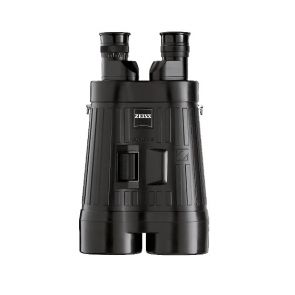
Image stabilization

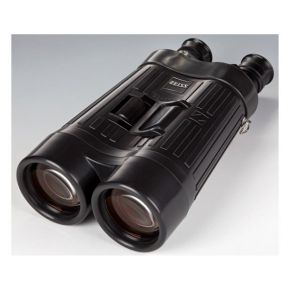
Image stabilization binoculars are designed to counteract the natural unsteadiness of the hand. This self-steadying feature employs gyroscopes and liquid filled prisms which autocorrects for gitters and shakes. As magnification increases, so does the instability of the image, regardless of how steady handedness the user may be. Therefore, image stabilization is particularly important for binoculars with high magnification. Image stabilization is also valuable for use in unsteady situations, such as when boating, or for long term observations where muscle fatigue can amplify unsteadiness. Hence, with image stabilizers, you can enjoy clearer viewing for a longer period of time.


Check out:

BUSHNELL 10 X 35 Image Stabilizing Binoculars


Focus: individual vs center

Center focus allows both eyepieces to be adjusted simultaneously. This is useful for applications that require fast and frequent adjustments. Centre focus binoculars are a popular choice for hunting, birding, and general wildlife observation

Individual focus binoculars require that each eyepiece be adjusted separately every time you change the focus. These binoculars are good for applications that do not require frequent readjustments, such as boating, surveillance and astronomy.


Example of an individual focus binoculars:

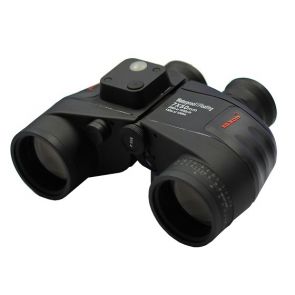
Steiner Binoculars

STEINER Binoculars 7x50 Commander XP w/Compass


Example of a center focus binoculars:

Saxon Binoculars

SAXON 12x32UCF Compact Binoculars


Prisms: porro vs roof

To ensure the binocular image arrives in your eye at the correct orientation, prisms are placed between the eyepieces and the objective lenses. Binocular prisms come in two types: porro prisms and roof prisms. Traditional binoculars use porro prisms which account for the shoulder like contours that protrude outward from the binoculars’ optical tubes. Roof prisms are an innovation that eliminate the need for these shoulders. As a result, roof prism binoculars feature a streamline design, lightweight and greater portability. This benefits as you might expect, come at a higher cost.


Example of a porro prism binoculars:

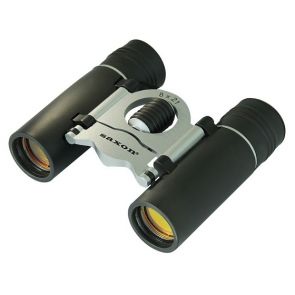
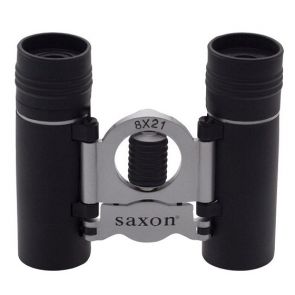
Saxon Porro Prism Binoculars

SAXON 8x21PP Porro Prism Binoculars


Example of a roof prism binoculars:

Saxon Zoom Binoculars

SAXON 10-30x50 Zoom Binoculars


Water resistance

First of all, you should take note that water resistant and water proof binoculars are not created equal. Water resistant binoculars feature tight seals and exterior coatings that offer protection from precipitation, dew and incidential splashes and spills. This is usually sufficient protection for most binocular applications. Binoculars that are truly water proof have features that further enable them to function whilst fully submerged in water(usually up to 5 meters deep). These type of binoculars are a wise choice for boating and/or marine use. When choosing binoculars, apart from users that are frequently in contact with water, it is alright to settle for binoculars without both water resistant or water proof features, since an ocassional few drops of water does not generally cause much or any damage at all.


Check out Ozscopes range of Waterproof binoculars.


Zoom binoculars

The main advantage of zoom binoculars is that they are able to achieve mutiple levels of magnification, but keep in mind that the size of the objective lens does not change. This means that as you increase magnification, you decrease the diameter of the exit pupil, which results in a dimmer image. With zoom binoculars, the magnification power is there when you need it, but the resulting images at high magnification will be dim and unstable. If most of your viewing will be at low magnifications, but you want the option for ocassional upclose viewing, zoom binoculars are a practical choice. However, if you plan to use high levels of magnification frequently, consider higher powered binoculars with appropriately sized objective lenses for comfortable viewing.


Check out Ozscopes range of Zoom binoculars.


You may also be interested in: night vision optics and our range of rifle scope or telescopes.